Starting an online legal services business may sound complicated, but it’s more achievable today than ever before. As more people search for legal help online, the demand for digital legal solutions grows rapidly. With the right approach, you can build a business that helps clients, offers flexible work, and creates steady income.
Whether you’re a licensed attorney or an entrepreneur interested in the legal tech space, this guide shows you how to turn your idea into a real online business.
Understanding The Online Legal Services Market
The market for online legal services has exploded in recent years. Services like document drafting, contract review, legal advice, and business formation are now offered on digital platforms. According to Statista, the global legal services market was valued at over $849 billion in 2023, with online services taking a bigger share each year.
Why is this market growing?
- Clients want lower costs and faster solutions.
- Many legal needs are simple and repeatable.
- Technology lets lawyers and consultants reach more people.
Who are your potential clients?
- Individuals needing wills, leases, or contracts.
- Small businesses seeking compliance, formation, and employment documents.
- Startups looking for fast legal answers.
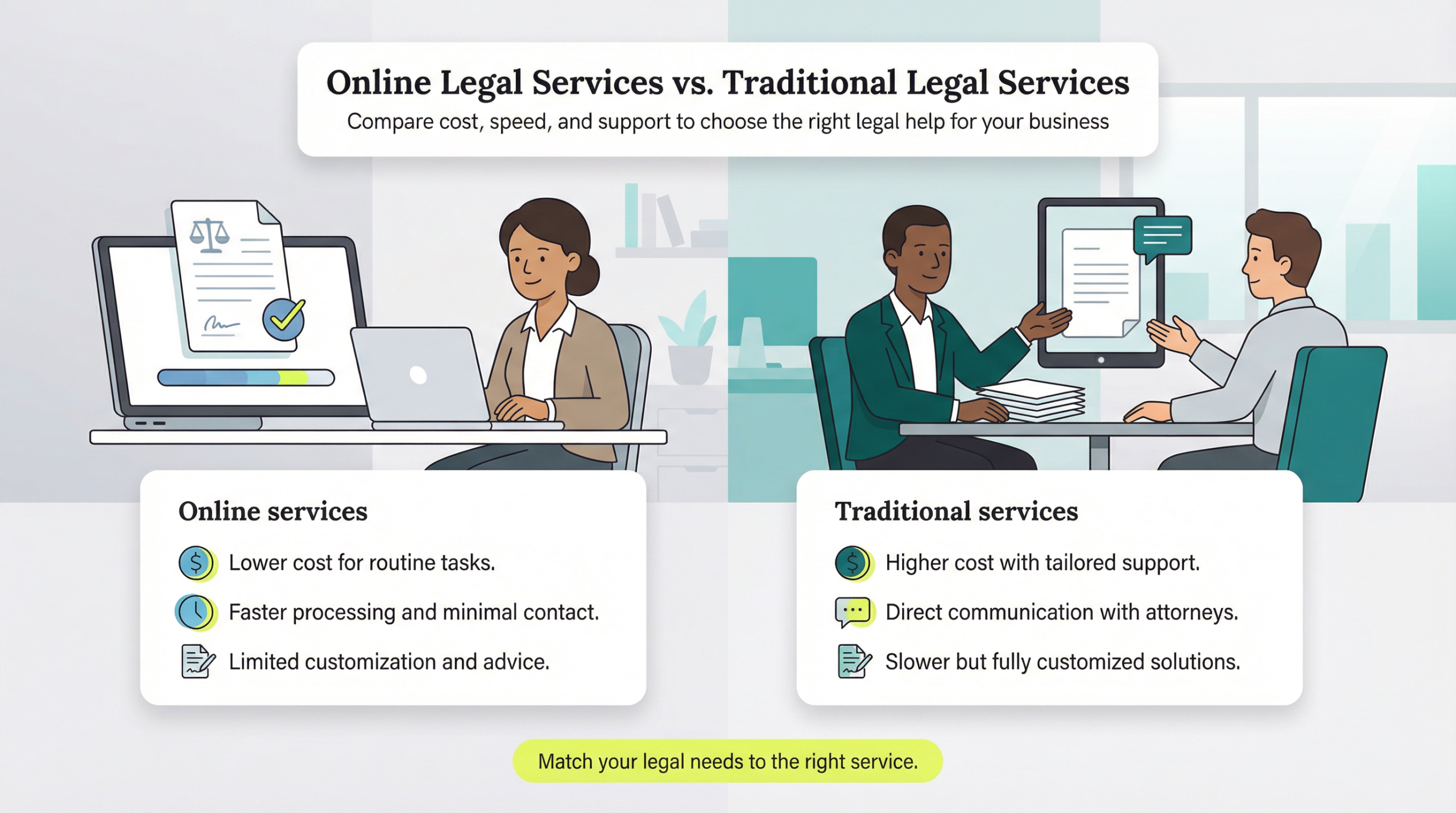
Understanding these groups helps you design services that fit real needs, not just what you think people want. A common mistake is assuming people will pay for complex advice online. In reality, most buyers seek simple, affordable, and predictable solutions.
Choosing Your Online Legal Services Niche
Selecting the right niche is key. Not every legal service can be delivered online, and not every client will trust digital solutions for high-stakes issues. Focus on areas that match your expertise and work well over the internet.
Popular online legal service niches include:
- Business formation – LLCs, corporations, and partnerships.
- Contract drafting and review – for freelancers, startups, and small companies.
- Estate planning – simple wills and powers of attorney.
- Intellectual property – trademark or copyright registration.
- Family law – uncontested divorce or name changes.
When choosing your niche, consider:
- Your qualifications and experience.
- Competition in that area (look at websites like LegalZoom or Rocket Lawyer).
- Client demand online.
- State or country rules for offering legal services online.
A non-obvious tip: Start with a narrow focus. For example, instead of “contracts,” offer “independent contractor agreements for digital marketing agencies.” This makes marketing easier and helps you stand out.
Legal And Regulatory Considerations
Providing legal services online means you must follow strict rules. The law often requires only licensed attorneys to give legal advice. Some services, like document templates, may not need a law license but still have restrictions.
Key points to check:
- Licensing: Are you allowed to offer these services in your state/country?
- Unauthorized Practice of Law (UPL): Avoid giving legal advice if you’re not a licensed attorney.
- Advertising rules: Lawyers must follow specific rules when promoting services online.
- Privacy and data protection: You’ll handle sensitive client data, so follow laws like GDPR or CCPA if serving US/EU clients.
Consult your state bar association or a legal advisor before launching. Many new businesses skip this step and face warnings or fines later.
Creating A Business Plan And Pricing Strategy
Like any business, you need a simple but clear plan. This doesn’t mean dozens of pages. Focus on the essentials:
Key parts of your business plan:
- Target market: Who are your clients? (e.g., freelancers, small business owners)
- Services offered: What exactly will you deliver online?
- Revenue model: Will you charge per document, by subscription, or hourly?
- Marketing: How will people discover your services?
- Operations: How will you deliver services, collect payments, and handle support?
Pricing strategies for online legal services often include:
- Flat fees: Simple, predictable, and preferred by most clients. Example: $199 for a basic LLC formation package.
- Subscriptions: Clients pay a monthly fee for ongoing access to legal support or documents.
- Custom quotes: For more complex or ongoing work.
Here’s a simple comparison of pricing models:
| Model | Pros | Cons | Example Service |
|---|---|---|---|
| Flat Fee | Easy to understand, quick sales | May not fit complex needs | Will drafting |
| Subscription | Steady income, client loyalty | Requires ongoing value | Business legal support |
| Custom Quote | Fits any case size | Slower sales process | IP litigation |
A non-obvious insight: Clients often value clarity and speed as much as low prices. Make your service steps and fees easy to understand.
Building Your Online Platform
Your website is your storefront. It must look professional and work smoothly on phones and computers. Even if you’re not a tech expert, you can use website builders like Wix, Squarespace, or WordPress.
Essential features for your site:
- Clear service list: Clients should see what you offer, prices, and what’s included.
- Easy contact options: Live chat, contact forms, or booking calendars.
- Secure payment system: Accept credit cards, PayPal, or Stripe.
- Document upload/download: Clients need to share files safely.
A simple website structure could look like this:
| Page | Purpose | Key Content |
|---|---|---|
| Home | First impression | Service summary, call-to-action |
| Services | Details and prices | Service breakdown, FAQs |
| About | Build trust | Credentials, mission, team |
| Contact | Client connection | Form, email, phone, chat |
Security tip: Use HTTPS (SSL certificate) to protect client data. Many clients will not trust a site without the padlock icon in the address bar.
Marketing Your Online Legal Services
Building a website is just the start. To attract clients, you need a plan to drive traffic and build trust.
Effective marketing channels:
- Search engine optimization (SEO): Optimize your site for keywords like “online contract review” or “startup legal help.”
- Content marketing: Write blogs or guides that answer common legal questions.
- Pay-per-click ads (PPC): Google Ads or Facebook can bring fast traffic.
- Social media: Use LinkedIn, Twitter, or Facebook to reach business owners.
- Partnerships: Connect with accountants, business consultants, or co-working spaces.
A data point: According to the American Bar Association, over 35% of clients find legal help through online search. If you’re not visible on Google, you’re missing a large market.
Avoid these common mistakes:
- Ignoring online reviews or reputation management.
- Over-promising (e.g., “guaranteed results”) which may break advertising rules.
- Neglecting mobile users—over half of visitors use phones.
Credit: www.business.com
Delivering Legal Services Online
Delivering services online is different from traditional law firms. You need to create a smooth, safe, and clear process.
Step-by-step client experience:
- Inquiry: Client fills a form or books a call.
- Intake: Gather client details and goals.
- Document collection: Securely share and receive files.
- Service delivery: Draft, review, or advise as promised.
- Feedback and payment: Collect payment and ask for reviews.
Best practices:
- Use secure client portals for sharing sensitive documents.
- Set clear timelines and communicate delays.
- Automate where possible (e.g., e-signature tools or appointment booking).
Some services, like giving personalized advice, may need video calls. Make sure you have a quiet, professional space and reliable internet.
Common Challenges And How To Overcome Them
Launching an online legal services business is rewarding but comes with challenges. Here’s how to tackle the most common ones:
1. Earning client trust: Many clients worry about scams or poor service online. Show your credentials, share testimonials, and offer clear guarantees (like a refund policy).
2. Competing with large platforms: Big names like LegalZoom have big budgets. You can win by being more personal, faster, or more specialized.
3. Managing compliance: Laws change often. Stay updated with your local bar association newsletters or legal tech blogs.
4. Handling scope creep: Clients sometimes expect more than they paid for. Use clear engagement letters and pricing terms to set limits.
5. Balancing automation and personal touch: Don’t automate everything—clients still want real human contact for important legal issues.
A less obvious insight: Many successful small providers find their first clients by partnering with other professionals (e.g., accountants) who serve the same market.

Credit: www.vecteezy.com
Scaling Your Online Legal Services Business
Once you have steady clients and processes, look for ways to grow.
Ways to scale:
- Add new services: Expand into related areas, like compliance or HR support.
- Hire virtual staff: Bring on other lawyers or paralegals as contractors.
- Invest in automation: Use software to handle routine tasks, freeing up time for more complex work.
- Expand your marketing: Try new channels or invest in public relations.
Here’s a quick overview of scaling methods:
| Scaling Method | Benefits | Risks |
|---|---|---|
| Hiring staff | Increase capacity, serve more clients | Higher costs, need for management |
| Automation tools | Lower costs, faster service | Upfront investment, learning curve |
| Service expansion | More revenue streams | Risk of losing focus |
A practical tip: Grow slowly and keep quality high. It’s better to have happy, repeat clients than to chase fast growth and risk mistakes.
Frequently Asked Questions
What Qualifications Do I Need To Start An Online Legal Services Business?
In most places, you need to be a licensed attorney to give legal advice. However, some services—like selling legal templates—may not require a license. Always check your local laws and bar association rules to avoid the unauthorized practice of law.
How Much Does It Cost To Start An Online Legal Services Business?
Startup costs can range from $1,000 to $10,000, depending on your website, marketing, and software needs. Basic services can start with a few thousand dollars if you use website builders and free marketing. Higher costs come with advanced tech or hiring staff.
Can I Offer Services To Clients In Other States Or Countries?
Rules vary by location. Many states only let attorneys serve clients where they’re licensed. For document services, you may have more flexibility, but always disclose where you’re licensed and check for cross-border legal restrictions.
How Do I Protect Client Information Online?
Use secure websites (HTTPS), encrypted document sharing, and strong passwords. Follow privacy laws (like GDPR or CCPA) if serving international clients. Consider cybersecurity insurance for extra protection.
Where Can I Learn More About Legal Technology Trends?
The American Bar Association’s Legal Technology Resource Center shares updates, research, and best practices for online legal services. Visit ABA Legal Technology Resource Center for more information.
Starting an online legal services business can be both profitable and meaningful. With careful planning, legal compliance, and a focus on client trust, you can build a digital law business that stands out—even in a competitive market. Stay open to new technology, keep learning, and put your clients first for lasting success.

Credit: mainstreetlaunch.org
Read More:
- How to Get Free Or Low-Cost Legal Services: Your Complete Guide
- How Legal Services Protect Your Digital Business: Essential Guide
- Why Every Business Needs Corporate Legal Services to Succeed
- Legal Services Trends Businesses Should Watch in 2026
- Best Legal Services for Civil Litigation Cases: Top Picks 2024
- Best Legal Services for Child Support Cases: Top Choices 2024
- Legal Services for Personal Injury Settlements: Maximize Your Claim
- Legal Services for Nonprofit Organizations: Essential Guide 2024